
Wait! Don’t Go Yet! 👋
We see you eyeing those adorable outfits! 😍 Before you leave, here’s 10% OFF your first order!
Hurry, your little one’s next favorite outfit is waiting! 🛍️✨
A strong discard is not simply a tile you dislike. It is the tile with the lowest value to your realistic hand options, after accounting for what the table has revealed.
A tile is connected when it supports multiple parts of your plan. Strong connections include:
Use How to Choose a Hand before rating individual tiles.
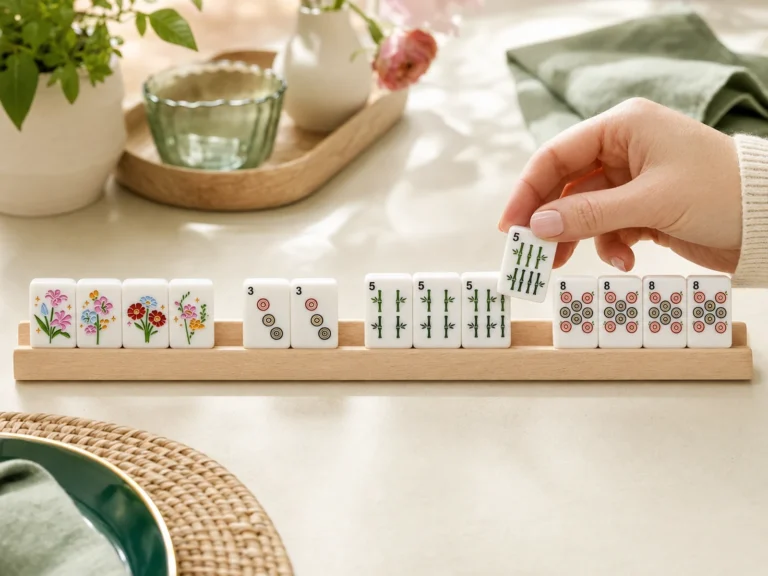
Jokers cannot replace singles or pairs, so these positions deserve special attention. A natural pair may be worth protecting even when a loose number tile fits more visible places.
Jokers themselves provide flexibility in groups of three or more. Review How to Use Jokers.
Early in the game, good discard candidates often include isolated tiles that fit neither shortlisted hand, weak off-suit numbers, or special tiles unsupported by your rack. Recheck after every draw; yesterday’s keeper may become today’s discard.
Visible exposures and prior discards provide information. A tile that appears harmless early may become useful to an opponent after an exposure identifies the needed group.
There is no perfectly safe discard. As the game advances, prefer tiles already discarded in quantity or tiles less consistent with visible exposures—but never assume zero risk.
Consider abandoning your first target when:
Changing direction is good play when the evidence changes. Reorganize with the rack-pattern guide and keep your normal turn routine.
Before releasing a tile, ask:
Then name the discard clearly and let it go.
Frequent short games build pattern recognition faster than memorizing rules alone. Explore American Mahjong tile sets.
Next: American Mah Jongg Table Etiquette
Rules note: Discard safety and hand selection are strategy, not guarantees. Rule cards, house customs, and tournament conditions vary.