
Wait! Don’t Go Yet! 👋
We see you eyeing those adorable outfits! 😍 Before you leave, here’s 10% OFF your first order!
Hurry, your little one’s next favorite outfit is waiting! 🛍️✨
Choosing a hand is not a single decision made after the deal. It is a process of narrowing the card as your tiles change.
Begin by reading the current card correctly. If its notation still feels unfamiliar, start with How to Read the American Mah Jongg Card.
Look first for assets that are difficult to replace:
Do not count only how many tiles fit. A pair or rare natural tile may be more valuable than several unrelated singles.
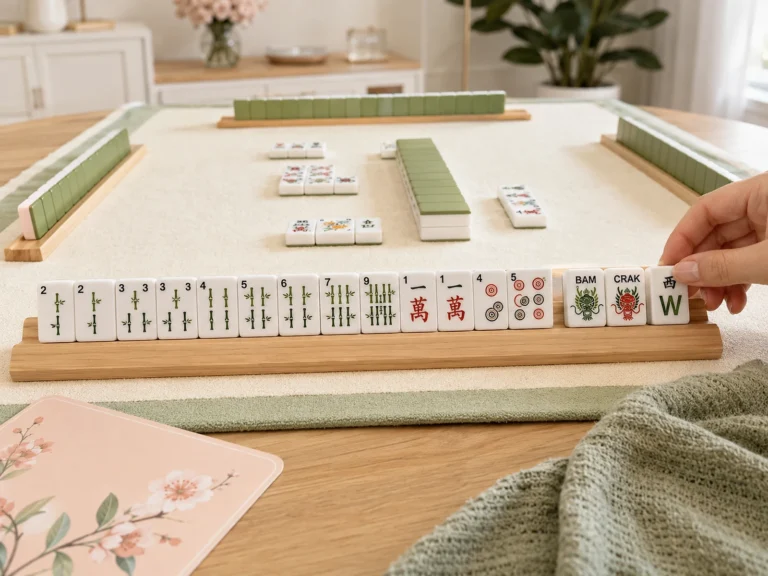
Use what your rack already does well. Many odd numbers suggest scanning odd-number hands. Several consecutive tiles suggest run-based sections. Multiple Winds or Dragons justify checking those families. A dominant suit may favor a one-suit or suit-heavy option.
Choose a primary hand and a backup that share several needed tiles. If both use your Flowers, pair, and main suit, Charleston passes and early draws can support either direction.
Avoid selecting two hands with almost no overlap. That is not flexibility; it is two unrelated shopping lists.
For each candidate, count the missing natural requirements, especially singles and pairs where Jokers cannot help. Also consider whether required groups of three or more could later use Jokers; review How to Use Jokers.
Before favoring a hand, ask:
During the Charleston, pass tiles that help neither candidate. After each pass, rescan the card. You are allowed to change direction.
Commit more strongly when your rack has multiple completed components, the hardest pairs or singles, and a realistic path to the remaining tiles. Change direction when needed natural tiles have been discarded repeatedly, your backup becomes much closer, or an exposure makes your first plan impossible.
As play begins, learn how a turn works so every draw becomes another clean decision point.
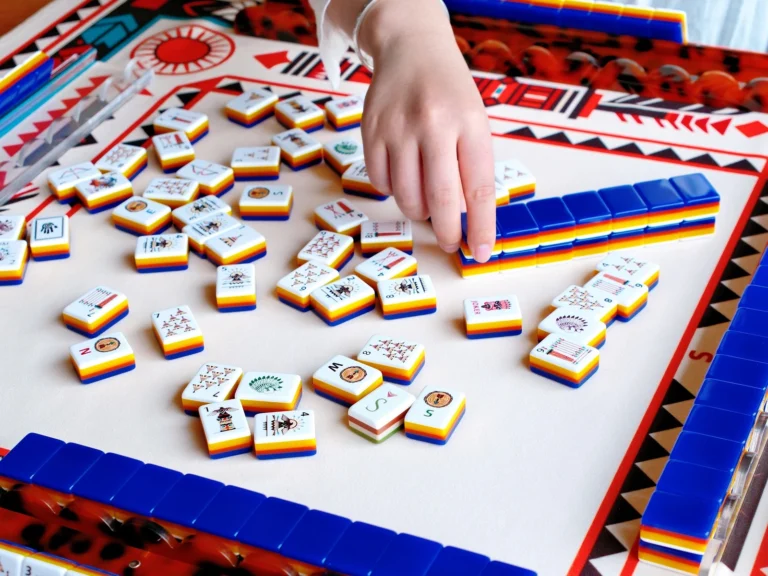
A complete, readable tile set makes pattern comparison easier for new players. Explore American Mahjong tile sets for practice and game night.
Next: How a Turn Works in American Mah Jongg
Rules note: Use the current card. House and tournament practices may vary, and card content changes annually.