
Wait! Don’t Go Yet! 👋
We see you eyeing those adorable outfits! 😍 Before you leave, here’s 10% OFF your first order!
Hurry, your little one’s next favorite outfit is waiting! 🛍️✨
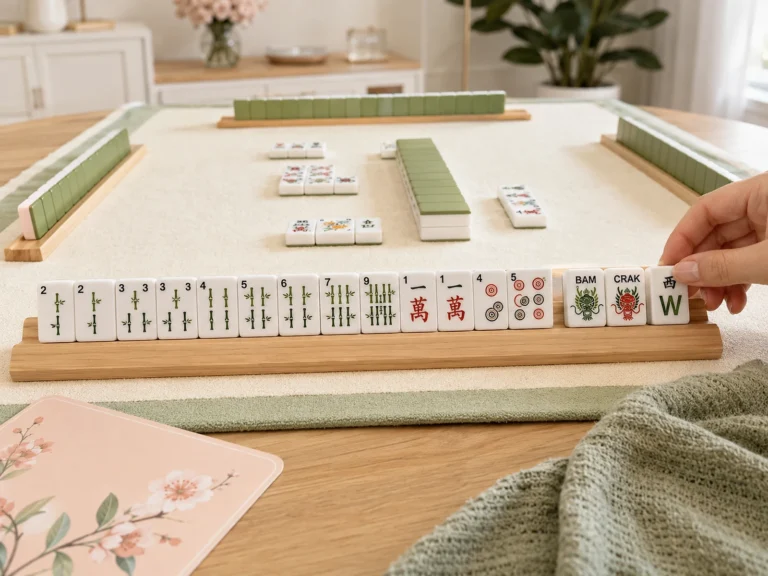
A well-organized rack reduces mental load. The goal is not a perfect display; it is a layout that helps you compare tiles with the card and change direction quickly.
Group your concealed tiles loosely as:
Within each numbered suit, arrange low to high. You can now see pairs, consecutive runs, gaps, odds, evens, and repeated numbers across suits.
If tile names are still unfamiliar, review Get to Know the Tiles.
After sorting, scan for:
Use those signals to shortlist card lines with How to Choose a Hand.
Your first arrangement is temporary. After the Charleston and important draws, move your likely hand components closer together. Keep backup tiles nearby but distinct enough to compare.
Do not preserve a tidy pattern after it stops helping. A useful rack changes as your plan changes.
Constantly separating exact groups, leaving dramatic gaps, or moving every incoming tile into one obvious position can reveal your direction. Vary your spacing, pause before rearranging, and do not point at the matching card line.
You do not need to hide normal play, but you also do not need to provide a diagram of your hand.
Called groups belong face up on top of the rack, separate from concealed tiles. Do not mix an exposure back into the concealed area. Review Calling a Tile and Exposed vs. Concealed Hands.
After a major change:
Racks with clear concealed and exposed areas make organization easier. Browse American Mahjong tile sets for a coordinated setup.
Next: Beginner Strategy: What to Keep and What to Discard
Rules note: Rack arrangement is strategic advice, not a formal rule. Always follow table procedures for exposures and tile counts.