
Wait! Don’t Go Yet! 👋
We see you eyeing those adorable outfits! 😍 Before you leave, here’s 10% OFF your first order!
Hurry, your little one’s next favorite outfit is waiting! 🛍️✨
Getting ready for your first American Mah Jongg game does not require a room full of accessories. You need the correct tiles, a current hands-and-rules card, and a comfortable way for four players to organize and move the tiles.
This guide separates the essentials from the optional extras so you can build a practical first setup without buying the wrong type of Mahjong set.
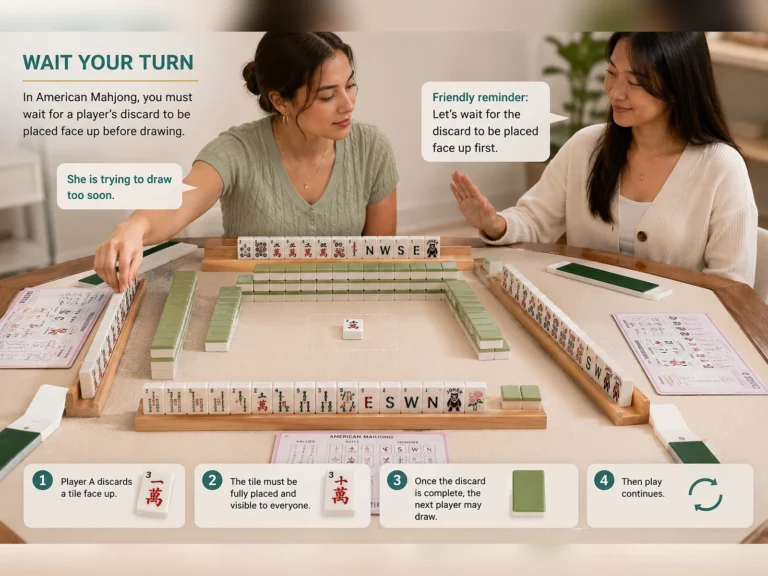
For a standard four-player American Mah Jongg game, prepare:
Everything else can be added later.
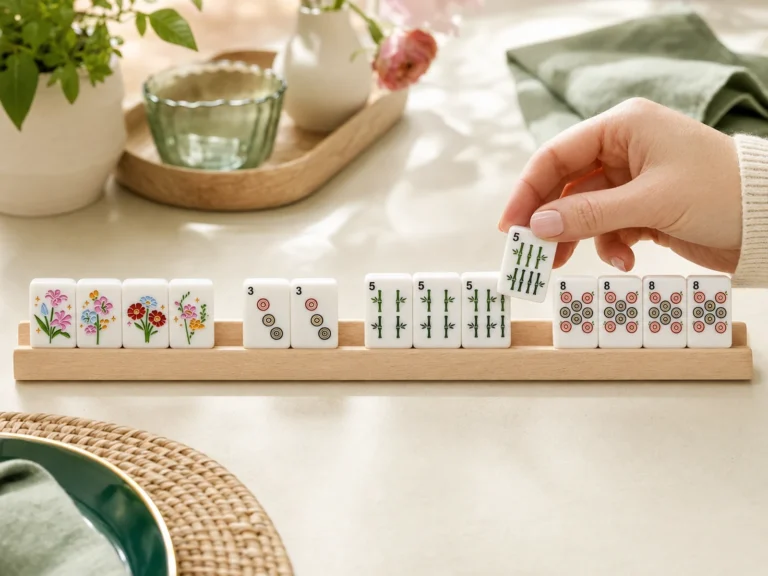
The most important purchase is the correct tile set. American Mah Jongg uses 152 tiles in regular play:
Many retail sets contain more than 152 tiles because they include spare blanks, replacement tiles, additional Flowers, or extra Jokers. Product listings may therefore describe sets containing 160, 166, or another total.
The important question is not the advertised total alone. Confirm that the set contains all tiles required for American play.
Beginner-friendly American Mah Jongg tiles usually have:
A traditional Chinese Mahjong set may not include Jokers and may use a different tile mix. It can be beautiful, but it may not be ready for standard American Mah Jongg without substitutions.
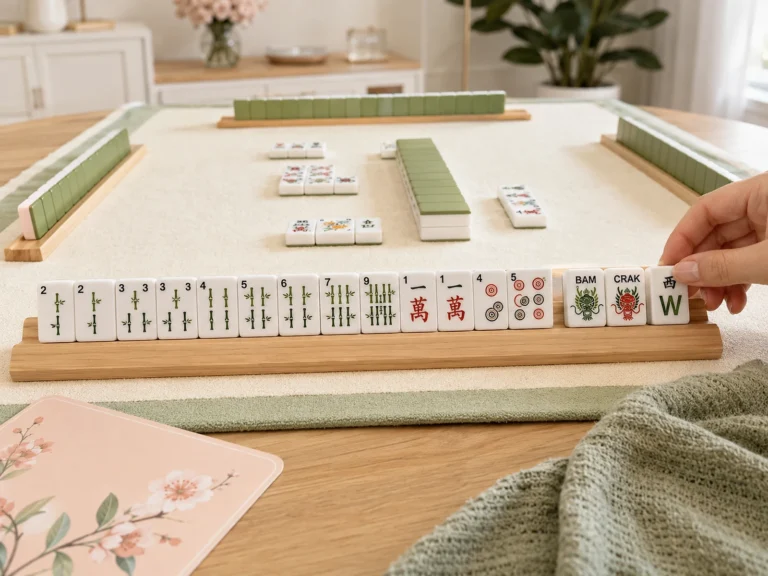
American Mah Jongg players normally use racks to organize and conceal their hands. Each player needs one rack.
A good rack should:
Check rack length and groove depth when purchasing racks separately. Oversized tiles may not sit securely in racks made for smaller tiles.
Pushers help players move the tile walls toward the center without reaching across the table or knocking tiles over.
Some racks include detachable or integrated pushers. Others require a separate set. For a first purchase, a rack-and-pusher combination is usually the simplest option because the sizes and materials are already coordinated.
Pushers are not the object of the game, but they make setup smoother and improve table etiquette—especially when playing with new guests.
American Mah Jongg is card-driven. Players build one of the legal hands printed on the current annual card rather than using only a fixed four-sets-and-a-pair structure.
Ideally, every player should have an individual card. Sharing slows the game and makes it difficult for players seated on opposite sides of the table to study their options privately.
When choosing a card:
The card usually is not included with a tile set, so check the product description before assuming it is in the box.
Dice are used during setup to determine seating or the starting position and to establish where the wall is broken, depending on the rules being followed.
Most complete sets include dice. If yours does not, an ordinary pair of six-sided dice is sufficient.
A wind indicator—sometimes called a bettor—helps the table track the current round or dealer position.
Some social groups use it consistently, while others track the position informally. It is helpful but not as essential as tiles, racks, pushers, and cards.
Many complete American Mah Jongg sets include one.
You do not need a dedicated Mahjong table. A stable square, round, or rectangular dining table can work if it gives four players enough space for:
Avoid tables that are so large that players must stretch to reach the center. Also avoid surfaces that are unstable, heavily textured, or easily scratched.
A mat is optional, but it is one of the most useful early upgrades.
It can:
Choose a mat that lies flat and leaves enough room for all four racks. A non-slip backing is especially helpful on polished tables.
Once you confirm that the set supports American play, compare the features that affect everyday use.
For beginners, clear numbers and familiar labels are more important than intricate artwork. High contrast between the symbols and tile face reduces hesitation during calls and discards.
Larger tiles may be easier to read and feel substantial in the hand, but they need compatible racks and more table space. Smaller tiles are easier to transport but may be less comfortable for long games.
Check the exact tile dimensions rather than relying only on descriptions such as “standard” or “large.”
Common modern sets use melamine, acrylic, or similar durable materials.
The best material is the one that balances appearance, readability, durability, and budget for your group.
A practical case or bag should keep tiles separated, protect rack edges, and make the set easy to carry. Check whether the storage option holds the racks and pushers as well as the tiles.
These items can improve the experience but are not necessary for the first game:
Start with the essentials and add accessories after learning what your group actually uses.
Beginners sometimes delay playing because the setup does not feel complete. You do not need:
One readable, complete set and four current cards are enough to begin learning.
Before buying or hosting, confirm:
Open the set and count the tiles before the first game. Separate spare tiles from the 152 used in play, test each rack and pusher, and place one card at every seat.
A quick equipment check prevents the first lesson from becoming a search for missing pieces.
The best beginner set is complete, readable, comfortable, and inviting enough that you want to bring it to the table again. Decorative details matter, but they should support—not interfere with—clear play.
Explore Call Mahj American Mahjong tile sets when you are ready to choose a design for your first game.
Buying note: Set contents and tile counts vary by manufacturer. Always review the complete component list and exact dimensions before purchasing.