
Wait! Don’t Go Yet! 👋
We see you eyeing those adorable outfits! 😍 Before you leave, here’s 10% OFF your first order!
Hurry, your little one’s next favorite outfit is waiting! 🛍️✨
Most turns follow one calm rhythm: draw, evaluate, and discard. Learning that rhythm keeps the table moving and prevents accidental extra or missing tiles.
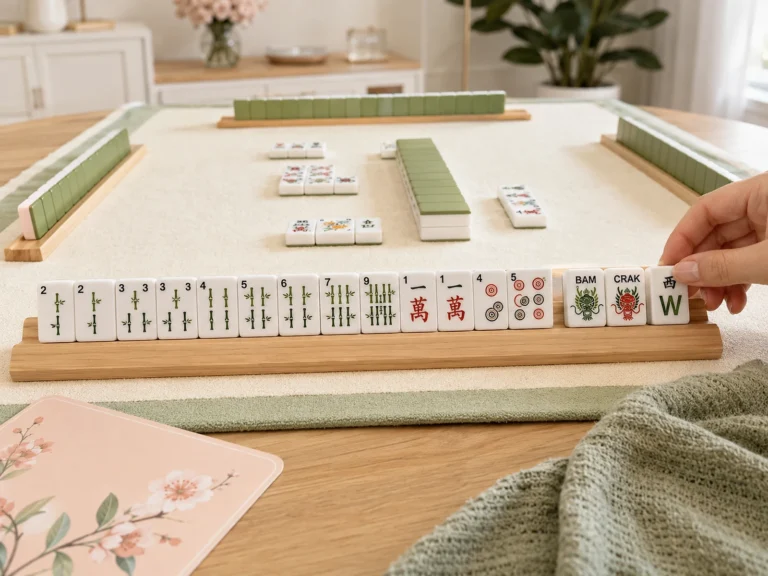
After the deal and Charleston, East begins play with 14 tiles and makes the opening discard. Other players normally begin their turns with 13 concealed tiles.
American Mah Jongg play proceeds counterclockwise. A claimed discard can change who acts next because play continues from the claimant.
After the discard is released and named, your turn ends. The next player draws unless someone makes a legal call.
During decision time after drawing, you usually hold 14 tiles. After discarding, you return to 13. Exposed sets remain part of your hand, so include them when checking your total.
If your rack count seems wrong, stop and ask the table before taking another action. Do not quietly draw or discard to repair it.
A player may call a discard to complete an eligible grouping, such as a Pung, Kong, or Quint, or to complete Mah Jongg. The claimant displays the legal grouping and then discards, unless the call completes the game.
You cannot normally call a discard merely to make a single or pair. The principal exception is when that discarded tile completes a legal Mah Jongg hand. Read Calling a Tile: Pungs, Kongs and Quints before your first full game.
Use this mental script:
Draw. Count. Compare. Exchange if legal. Choose. Discard and name it.
When choosing your discard, return to How to Choose a Hand as a Beginner. For wild-tile questions, review How to Use Jokers.
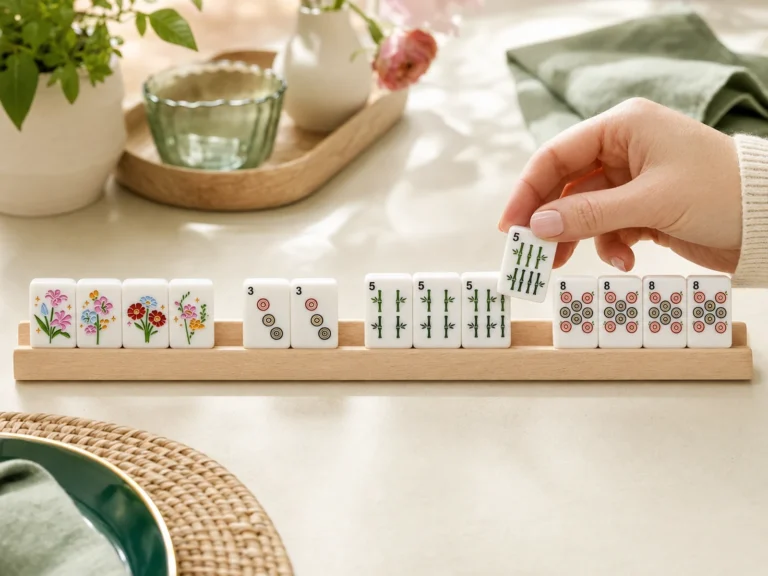
Clear tile faces and stable racks reduce beginner hesitation. Browse American Mahjong tile sets for a comfortable practice setup.
Next: Calling a Tile: Pungs, Kongs and Quints
Rules note: Timing, wall procedures, and corrections can differ under house or tournament rules. Confirm the rules used at your table.