
Wait! Don’t Go Yet! 👋
We see you eyeing those adorable outfits! 😍 Before you leave, here’s 10% OFF your first order!
Hurry, your little one’s next favorite outfit is waiting! 🛍️✨
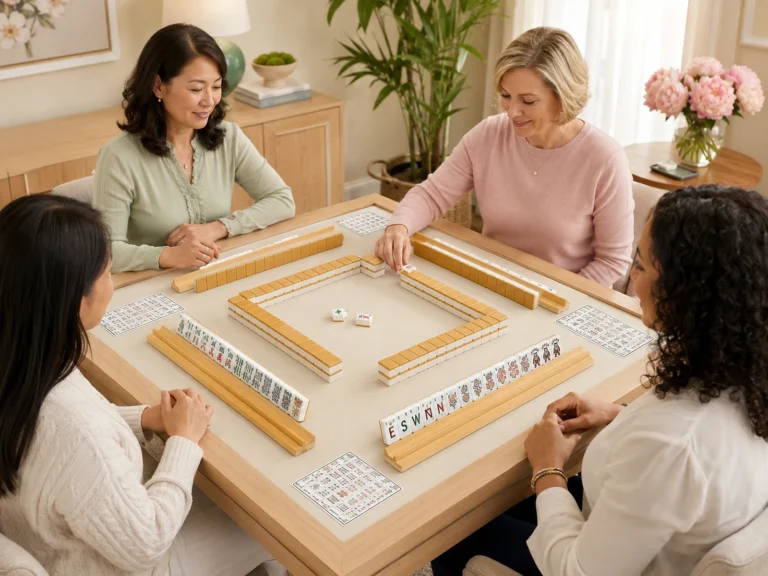
Once you know the tiles, it is time to prepare the table. American Mah Jongg setup may look elaborate, but the same routine is repeated before every game.
You need four players, a complete tile set, four racks with pushers, two dice, and a current American Mah Jongg card for each player.
A mat is optional, but it protects the table, reduces noise, and makes the tiles easier to move.
Make sure the playing set contains the standard 152 tiles. Turn all tiles face down in the center of the table and mix them thoroughly with both hands.
This mixing process is sometimes called “washing” the tiles.
Keep every tile face down so no player can identify a tile before the deal.
One player begins as East, also called the dealer. Tables use several accepted methods to choose East, including rolling dice or randomly selecting Wind tiles.
The remaining players sit around the table as South, West, and North. Follow the method used by your teacher, host, or regular group.
East begins with one additional tile and makes the first discard after the Charleston.
Each player builds a wall in front of their rack.
A standard wall contains:
Four walls of 38 tiles use all 152 playing tiles.
Use your pusher to straighten the wall. When everyone finishes, push the four walls toward the middle to form a square.
Do not reveal the tile faces while building.
The traditional deal uses dice to determine where the wall is opened. Exact dealing movements can vary among teachers and social groups, so beginners should follow the table host’s method.
Regardless of the dealing method, the result should be:
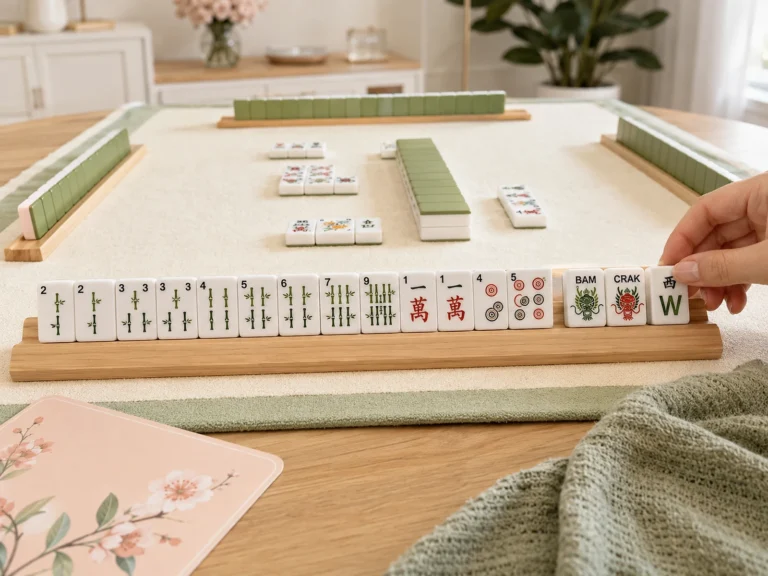
Place your tiles on the sloped portion of your rack so only you can see their faces.
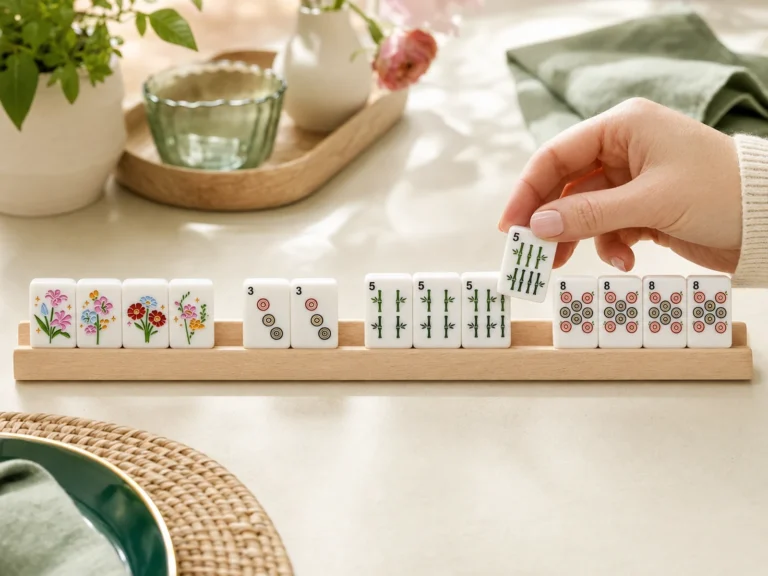
Before the Charleston begins, sort your hand so you can evaluate it quickly.
A useful beginner arrangement is:
There is no required arrangement. The goal is to make patterns easier to recognize while keeping your tiles hidden from the other players.
Study the current card and look for possible directions for your hand.
Do not worry about selecting the perfect hand immediately. At the beginning, look for broad clues:
You will refine your choice during the Charleston.
Before normal play, players pass unwanted tiles in a structured sequence called the Charleston.
Keep your tiles concealed while selecting and passing. Jokers may not be passed during the Charleston.
See Master the Charleston for the complete sequence and beginner strategy.
After the Charleston and any courtesy pass, East begins by discarding one tile. Play then proceeds counterclockwise.
On a normal turn, a player:
The next player draws unless another player legally calls the discard for an exposure or Mah Jongg.
Some sets include extra tiles. Count out the standard 152 used in play.
Each wall should contain 19 stacks of two tiles.
Only East begins with 14. The other players begin with 13.
Walls and dealt tiles should remain concealed from the other players.
No, but a mat improves comfort, protects the table, and makes shuffling quieter.
Ideally, yes. Sharing slows the game and makes it harder for beginners to compare possible hands.
East begins play and makes the first discard after the Charleston.
Social groups and teachers sometimes use different dice, wall-breaking, or dealing routines. Confirm the method before starting; the final hand counts should remain consistent.
Editor’s note: This article explains a common beginner setup. Follow the current official rules and any clearly stated tournament or house procedures used by your group.