
Wait! Don’t Go Yet! 👋
We see you eyeing those adorable outfits! 😍 Before you leave, here’s 10% OFF your first order!
Hurry, your little one’s next favorite outfit is waiting! 🛍️✨
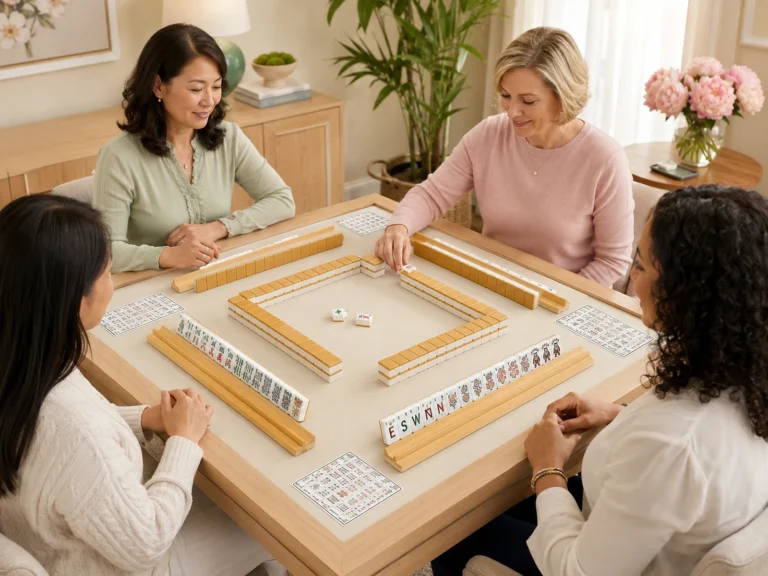
The Charleston is one of the features that makes American Mah Jongg unique. Before normal play begins, every player passes unwanted tiles in a coordinated sequence.
The goal is not simply to get rid of bad tiles. The Charleston helps you shape your hand, discover possible card lines, and gather information from the tiles moving around the table.
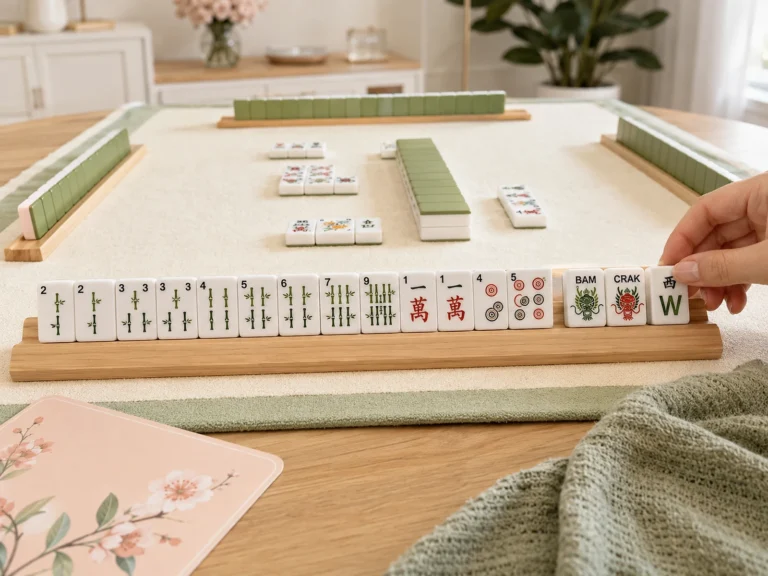
Each player should have:
East sets aside the extra tile temporarily while everyone completes the passing sequence.
The most important rule to remember is simple:
Never pass a Joker during the Charleston.
The first Charleston consists of three mandatory passes. Every player passes exactly three tiles each time.
The order is:
A common memory aid is:
Right, Across, Left — RAL.
Place the three selected tiles face down and move them together. Do not reveal them to other players.
After the first Charleston, players may complete a second Charleston if everyone agrees.
The order reverses:
Memory aid:
Left, Across, Right — LAR.
Because the second Charleston is optional, confirm clearly whether the table is continuing. House and tournament procedures can differ regarding how the decision is made.
On permitted final passes, a player may be allowed to make a blind pass. This means receiving tiles from one side and passing one or more of those tiles onward without looking at them.
Blind passing is useful when you do not have three safe tiles to give away. You may combine unseen incoming tiles with selected tiles from your own rack, depending on the applicable rule.
Do not assume a blind pass is allowed at every stage. Confirm the standard used by your teacher, host, or tournament.
After the Charleston, players sitting across from one another may agree to a final courtesy pass.
Each pair agrees to exchange zero, one, two, or three tiles. If the players request different numbers, the smaller number normally determines the exchange.
For example:
Jokers still may not be passed.
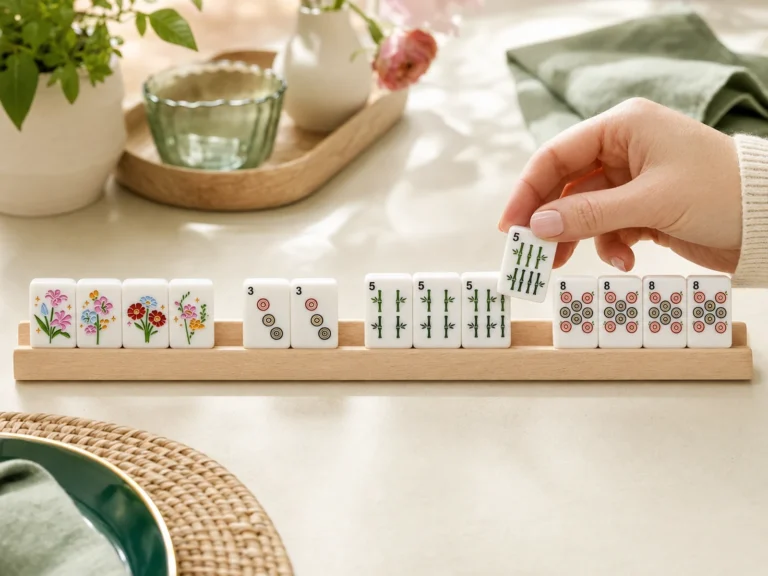
An isolated tile has little connection to the rest of your rack. A single high Dot in a mostly Bam hand may be an easy early pass.
Pairs are difficult to complete because Jokers cannot substitute in pairs. Do not break a useful pair too quickly.
Repeated numbers across suits can point toward card sections that use matching or related numbers.
Flowers and Winds appear in many hands, but not every hand. Keep them when your rack provides a reasonable direction; release them when they are completely disconnected.
You do not need to commit to one exact card line on the first pass. Keep two or three related possibilities until the rack becomes clearer.
The tiles you receive provide limited information.
If you repeatedly receive tiles from one suit, another player may be moving away from that suit. If a particular number never appears, it may be useful to someone else—or simply still hidden in the walls.
Treat these signals as clues, not proof. Nine tiles move through each player during the first Charleston, so early conclusions can be misleading.
Jokers cannot be passed during the Charleston or courtesy pass.
Each regular Charleston pass requires three tiles.
Wait until the pass is complete and all players are ready.
Keep flexible possibilities until your rack gives you a strong reason to commit.
Pairs are often valuable and cannot be completed with Jokers.
Before every pass, ask:
The first Charleston is generally part of standard play. Additional passing may be optional or handled differently under specific rules.
Yes. Flowers may be passed unless you decide they are useful to your developing hand.
No. Jokers may not be passed during Charleston-related exchanges.
No. Beginners often perform better by keeping a small group of related possibilities open.
Editor’s note: Charleston procedures, optional passes, and blind-pass details can vary between social, instructional, and tournament play. Confirm the rules being used before the game begins.