
Wait—here’s 10% off.
Enjoy 10% off your first order with code WELCOME10.
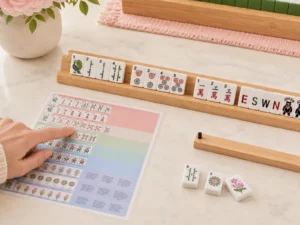
Choosing a hand is not a single decision made after the deal. It is a process of narrowing the card as your tiles change. Begin by reading the current card correctly. If its notation still feels unfamiliar, start with How to Read the American Mah Jongg Card. Step 1: Inventory the Hard-to-Rebuild Tiles Look first for assets that are difficult to replace: Do not count only how many tiles fit. A pair or rare natural tile may be more valuable than several unrelated singles. Step 2: Shortlist Card Sections Use what your rack already does well. Many odd numbers suggest scanning odd-number hands. Several consecutive tiles suggest run-based sections. Multiple Winds or Dragons justify checking those families. A dominant suit may favor a one-suit or suit-heavy option. Step 3: Keep Two Nearby Options Choose a primary hand and a backup that share several needed tiles. If both use your Flowers, pair, and main suit, Charleston passes and early draws can support either direction. Avoid selecting two hands with almost no overlap. That is not flexibility; it is two unrelated shopping lists. Step 4: Count Distance, Not Hope For each candidate, count the missing natural requirements, especially singles and pairs where…
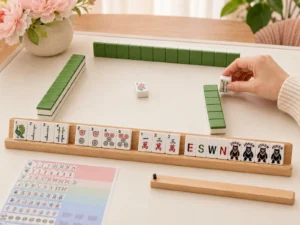
Most turns follow one calm rhythm: draw, evaluate, and discard. Learning that rhythm keeps the table moving and prevents accidental extra or missing tiles. Before Normal Turns Begin After the deal and Charleston, East begins play with 14 tiles and makes the opening discard. Other players normally begin their turns with 13 concealed tiles. American Mah Jongg play proceeds counterclockwise. A claimed discard can change who acts next because play continues from the claimant. The Standard Turn After the discard is released and named, your turn ends. The next player draws unless someone makes a legal call. Keep the Tile Count Straight During decision time after drawing, you usually hold 14 tiles. After discarding, you return to 13. Exposed sets remain part of your hand, so include them when checking your total. If your rack count seems wrong, stop and ask the table before taking another action. Do not quietly draw or discard to repair it. What If Someone Calls the Discard? A player may call a discard to complete an eligible grouping, such as a Pung, Kong, or Quint, or to complete Mah Jongg. The claimant displays the legal grouping and then discards, unless the call completes the game.…
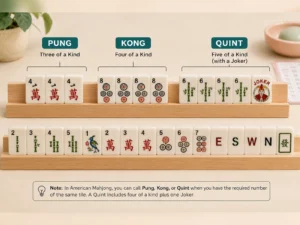
Calling lets you claim another player’s discard, but only for a legal purpose. A call is useful because it completes a needed group; it is costly because the exposure reveals information about your hand. When You May Call Under standard rules, you may call the most recent discard to complete a group of three or more identical tiles required by your card line: You generally may not call simply to create a single or pair. You may call any needed tile—including one completing a single or pair—when it gives you a valid Mah Jongg immediately. How to Complete a Call Play then continues from you, which may skip players who were between the discarder and claimant. Using Jokers in an Exposure Jokers may substitute in groups of three or more identical tiles, but not in singles or pairs. A discard itself cannot be a Joker because discarded Jokers cannot be claimed. Learn the full exchange rules in How to Use Jokers. Calls and Concealed Hands If your target line is marked C, do not expose a grouping. A concealed hand generally may call only the final tile that completes Mah Jongg. Lines marked X permit legal exposures. Review Exposed vs. Concealed…
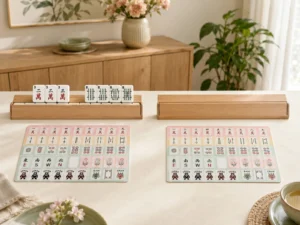
The final letter on a card line changes how you may build it: Read the full notation guide in How to Read the American Mah Jongg Card. What an Exposed Hand Allows For an X hand, you may call the most recent discard to complete a permitted Pung, Kong, Quint, or other qualifying group. Place the entire group face up on the rack. Those tiles remain part of your 14-tile hand. Exposed does not mean every tile must be visible before winning. It means the line may include legal exposures. Your uncalled tiles stay concealed on the sloped side of the rack. What a Concealed Hand Requires For a C hand, do not call a discard to expose an ordinary group. Build by drawing from the wall. You may generally call the final discarded tile if it completes the entire hand and you immediately declare Mah Jongg. Calling and exposing a group while pursuing a concealed line can make that line impossible. Learn how that affects play in What Makes a Hand Dead?. Can a Concealed Hand Use Jokers? Concealed does not mean “no Jokers.” Under standard play, Jokers may still substitute within eligible groups of three or more identical…

You declare Mah Jongg when your complete hand matches one line on the current card exactly. “Almost” matching, combining two lines, or having useful extra tiles does not count. The Winning Check Before announcing, verify: Review How to Read the American Mah Jongg Card if any notation is uncertain. Winning from the Wall If you draw the needed tile, confirm the checklist and announce “Mah Jongg.” Display the full hand so the table can verify it against the card. Winning from a Discard You may call the most recent discard when it completes your legal hand, even when the final position is a single or pair. A valid Mah Jongg call normally has priority over an ordinary Pung, Kong, or Quint call. For a concealed hand, the winning discard may generally be called even though earlier discards could not be used to expose groups. Compare the rules in Exposed vs. Concealed Hands. Do Not Rearrange the Evidence Too Quickly Lay out the hand in the same groupings as the card line. Keep existing exposures identifiable and allow the other players to count and verify. This makes honest mistakes easier to catch and explain. What If the Declaration Is Wrong? An incorrect…